
Critical Thinking Course Outline
Critical Thinking Course Outline - The core text for this course is how to reason. The purpose of a critical thinking class is to make you better at identifying, analyzing, criticizing, writing about, and constructing arguments. • explain bias and assumptions’ roles as barriers to critical thinking. The course covers the logical structures, fallacies, and probabilities of arguments, as well as the skills of evaluating and constructing arguments. Focus is on reading and writing assignments from across the disciplines to further improve and refine critical reading, writing, and thinking skills. • discuss factors influencing critical thinking. Reflect on their approach and attitudes toward critical thinking. We discuss various ways that reasoning can go wrong, both in others and in your own thinking, and. Describe the characteristics of effective deductive and inductive reasoning. • explore various thinking styles/preferences and their impact on critical thinking. Detect logical fallacies in moral, political, and scientific arguments. Focus is on reading and writing assignments from across the disciplines to further improve and refine critical reading, writing, and thinking skills. Where do other types of thinking fit in? Identify common psychological barriers to logical and critical thinking. Describe the characteristics of effective deductive and inductive reasoning. • explore various thinking styles/preferences and their impact on critical thinking. This course outline summarizes an introduction to critical thinking course offered at jamaica theological seminary. This document outlines the course details for a logic and critical thinking course, including instructor information, course description and objectives, units and contents, teaching methodologies, and assessment methods. Formulate arguments with sound and persuasive reasoning. The purpose of a critical thinking class is to make you better at identifying, analyzing, criticizing, writing about, and constructing arguments. • explain bias and assumptions’ roles as barriers to critical thinking. Characteristics of a critical thinker. 1.) recognize, identify, create and apply various logical structures and elements (and/or lack of them in the form of logical fallacies) for analyzing the logical efficacy of different written arguments and claims. Detect logical fallacies in moral, political, and scientific arguments. The purpose of. This syllabus outlines the course description, learning goals, textbook, assignments, and grading for a critical thinking course taught by diane michelfelder at macalester college in 2011. Formal and informal tools of logical analysis will be applied to controversial topical issues. Reflect on their approach and attitudes toward critical thinking. The course is divided into 4 modules that teach students skills. This document outlines the course details for a logic and critical thinking course, including instructor information, course description and objectives, units and contents, teaching methodologies, and assessment methods. The course aims to improve students’ ability to advance arguments persuasively and their ability to respond critically to the arguments of others. Focus is on reading and writing assignments from across the. Being able to ask the right questions, critique an argument, and logically dissect an issue occur constantly in the workplace and our lives. Reflect on their approach and attitudes toward critical thinking. Advanced study and practice of argumentative writing with emphasis on critical analysis and evaluation of texts. • discuss factors influencing critical thinking. It focuses on the kinds of. Formal and informal tools of logical analysis will be applied to controversial topical issues. Describe the characteristics of effective deductive and inductive reasoning. Develops understanding of informal logic and practical reasoning skills necessary for academic success, including tools needed to analyze information from a variety of sources such as academic essays, philosophic literature, news media and advertising. This course outline. The course is divided into 4 modules that teach students skills in critical analysis, argumentation, and academic writing. Develops understanding of informal logic and practical reasoning skills necessary for academic success, including tools needed to analyze information from a variety of sources such as academic essays, philosophic literature, news media and advertising. Formal and informal tools of logical analysis will. Where do other types of thinking fit in? • explain bias and assumptions’ roles as barriers to critical thinking. Explain philosophical approaches to critical thinking. Advanced study and practice of argumentative writing with emphasis on critical analysis and evaluation of texts. The course aims to improve students’ ability to advance arguments persuasively and their ability to respond critically to the. Characteristics of a critical thinker. This course outline summarizes an introduction to critical thinking course offered at jamaica theological seminary. Describe the characteristics of effective deductive and inductive reasoning. We discuss various ways that reasoning can go wrong, both in others and in your own thinking, and. It focuses on the kinds of arguments one is likely to encounter in. Advanced study and practice of argumentative writing with emphasis on critical analysis and evaluation of texts. Focus is on reading and writing assignments from across the disciplines to further improve and refine critical reading, writing, and thinking skills. Describe the characteristics of effective deductive and inductive reasoning. Characteristics of a critical thinker. Develops understanding of informal logic and practical reasoning. Formulate arguments with sound and persuasive reasoning. • discuss factors influencing critical thinking. Describe key features of various forms of arguments, including premises and conclusions, syllogisms, inductive or deductive, etc. Describe the characteristics of effective deductive and inductive reasoning. This course outline summarizes an introduction to critical thinking course offered at jamaica theological seminary. This course outline summarizes an introduction to critical thinking course offered at jamaica theological seminary. Traits of a critical thinker common critical thinking styles. The course is divided into 4 modules that teach students skills in critical analysis, argumentation, and academic writing. This document outlines the course details for a logic and critical thinking course, including instructor information, course description and objectives, units and contents, teaching methodologies, and assessment methods. Formal and informal tools of logical analysis will be applied to controversial topical issues. Describe key features of various forms of arguments, including premises and conclusions, syllogisms, inductive or deductive, etc. We introduce argument and its role in critical thinking, show you how to reason with certainty and with uncertainty, and explore the nature of explanation. Where do other types of thinking fit in? This syllabus outlines the course description, learning goals, textbook, assignments, and grading for a critical thinking course taught by diane michelfelder at macalester college in 2011. The purpose of a critical thinking class is to make you better at identifying, analyzing, criticizing, writing about, and constructing arguments. 1.) recognize, identify, create and apply various logical structures and elements (and/or lack of them in the form of logical fallacies) for analyzing the logical efficacy of different written arguments and claims. Describe the characteristics of effective deductive and inductive reasoning. Identify common psychological barriers to logical and critical thinking. Advanced study and practice of argumentative writing with emphasis on critical analysis and evaluation of texts. Focus is on reading and writing assignments from across the disciplines to further improve and refine critical reading, writing, and thinking skills. • discuss factors influencing critical thinking.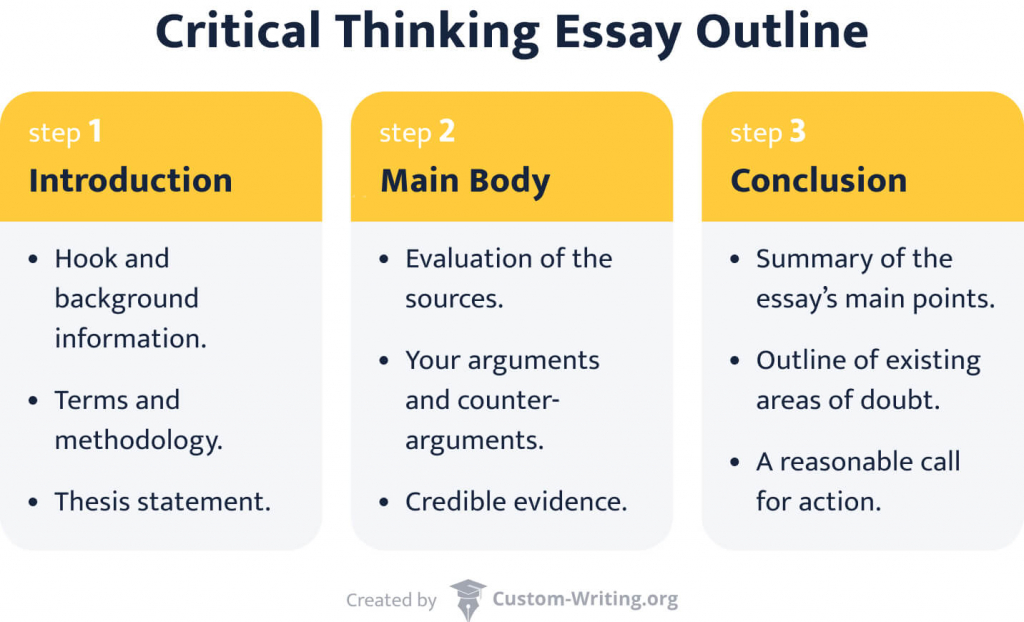
Critical Thinking Course Outline CalvinqoStevens

(DOC) LISTENING AND CRITICAL THINKING Course Outline
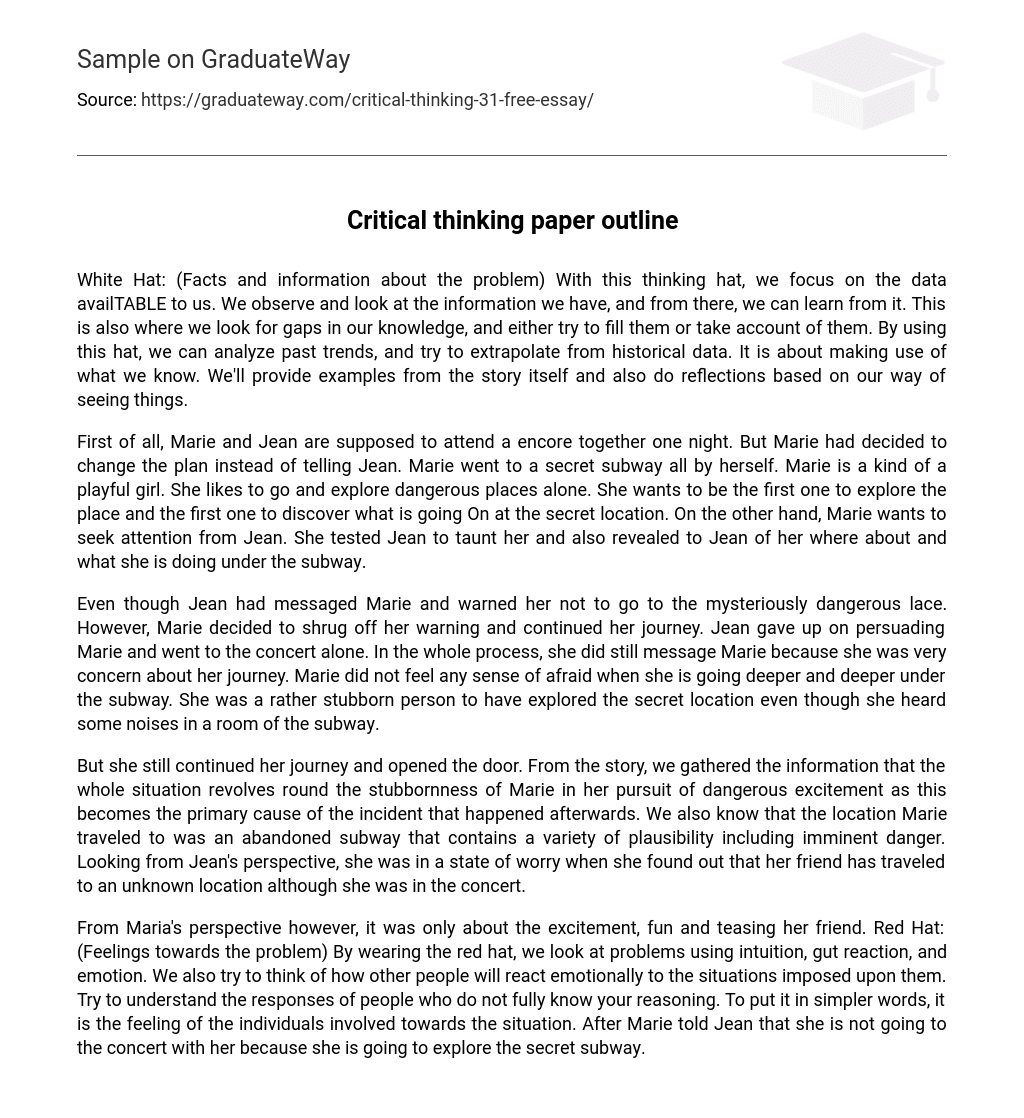
⇉Critical thinking paper outline Essay Example GraduateWay

Outline of critical thinking elements in course Download Scientific
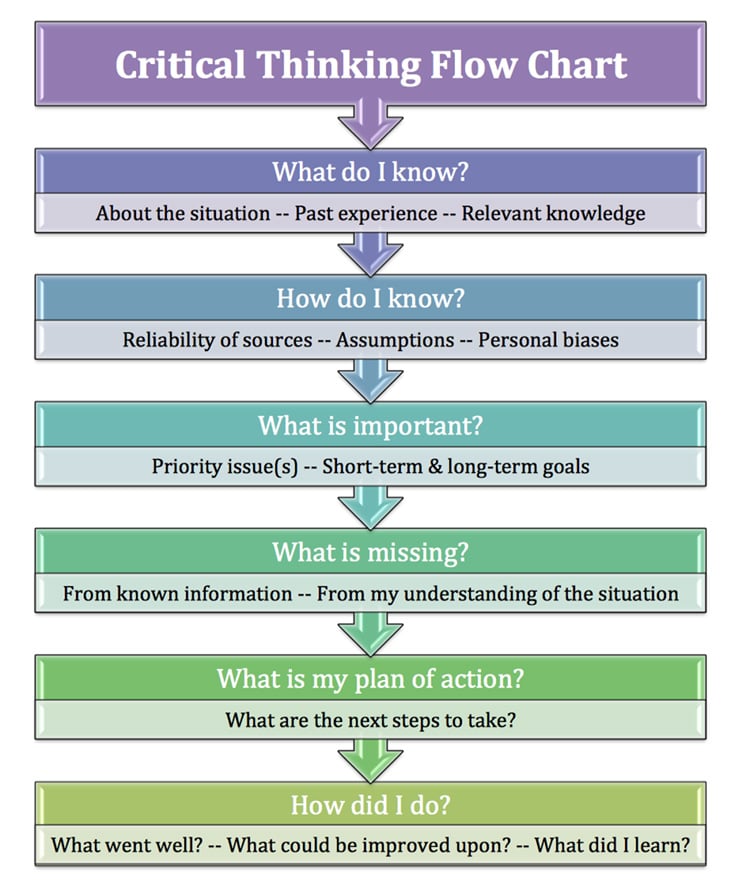
The 5 Most Useful Critical Thinking Flowcharts For Your Learners

What is critical thinking Chapter 1 What Is Critical Thinking? 1

Critical Thinking Syllabus

😂 Critical thinking course outline. Creative and Critical Thinking

(DOC) TOPIC CRITICAL THINKING OUTLINE Mau Valdez Academia.edu
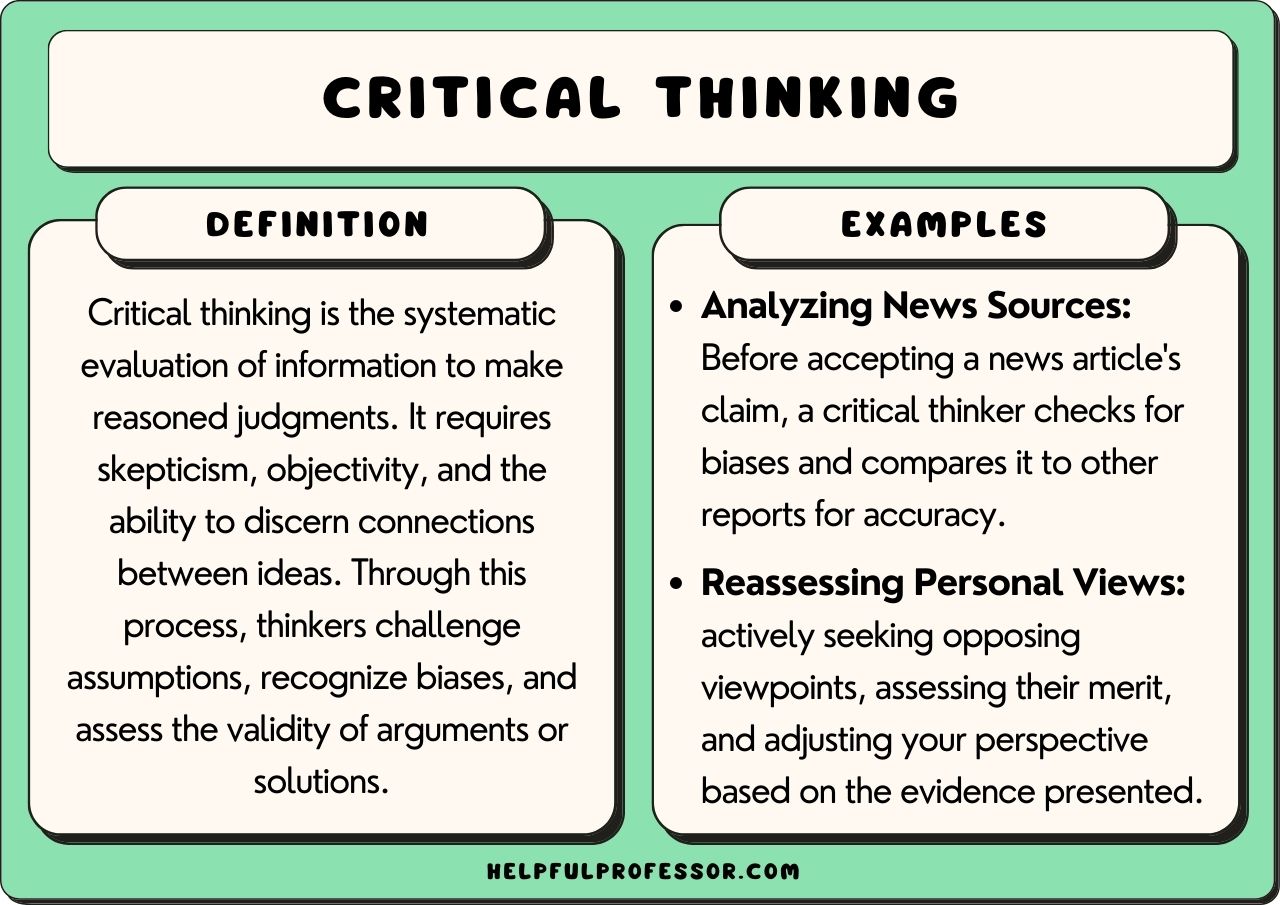
25 Critical Thinking Examples (2025)
Characteristics Of A Critical Thinker.
Formulate Arguments With Sound And Persuasive Reasoning.
The Course Covers The Logical Structures, Fallacies, And Probabilities Of Arguments, As Well As The Skills Of Evaluating And Constructing Arguments.
• Explore Various Thinking Styles/Preferences And Their Impact On Critical Thinking.
Related Post: