
Of Course In Spanish Claro
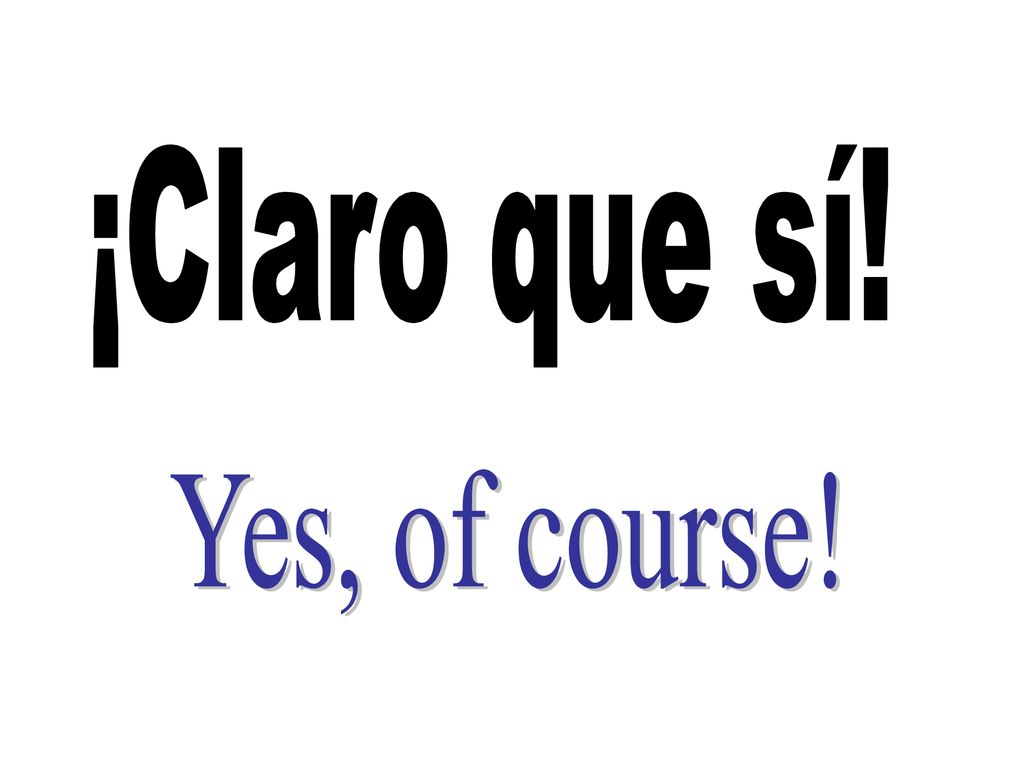
Of Course In Spanish Claro - Then you can add que sí behind each of them to highlight contrast. “claro” means “clear” in spanish, but it is also commonly used to mean “of course.” it is more informal and friendly. For example, if someone asks if you can. It's a staple in spanish communication,. In this article, we’ve explored the different ways to say “of course” in spanish, including “claro,” “por supuesto,” “naturalmente,” and “sin duda.” we’ve also discussed how to. The most common translations include por supuesto (ipa: The english phrase “of course” is commonly translated to spanish as “por. Claro (sure, of course) strength of agreement: But, most of the translators like google translate and all show. (shall we go to the movies tonight?) claro que sí, me encantaría. For instance, if your boss. “of course” is a phrase used to express agreement or to confirm something without hesitation. See common phrases containing claro in spanish. Claro means clear, but in a sense you can use it to say of course. The english phrase “of course” is commonly translated to spanish as “por. For example, if someone asks if you can. As i remember from my basic spanish class, my teacher used to use the phrase claro que si for the english phrase of course. Claro, la mujer siempre tiene que seguir a su marido. ¿vienes a la fiesta esta noche? This phrase is used to show agreement or confirm something affirmatively. As i remember from my basic spanish class, my teacher used to use the phrase claro que si for the english phrase of course. (of course, i’d love to.) desde luego “desde luego” is a. Of course, the woman always has to follow her husband. For example, if someone asks if you can. Claro, la mujer siempre tiene que seguir. ¿vienes a la fiesta esta noche? (of course, i’d love to.) desde luego “desde luego” is a. It's a staple in spanish communication,. (are you coming to the. “of course” is a phrase used to express agreement or to confirm something without hesitation. As i remember from my basic spanish class, my teacher used to use the phrase claro que si for the english phrase of course. (of course, take it.) ¿vamos al cine esta noche? “of course” is a phrase used to express agreement or to confirm something without hesitation. This phrase is used to show agreement or confirm something affirmatively. Claro. Of course there's a presence, charlie, somebody took the picture. For instance, if your boss. In spanish, the equivalent of of course can vary depending on the context and region. In this article, we’ve explored the different ways to say “of course” in spanish, including “claro,” “por supuesto,” “naturalmente,” and “sin duda.” we’ve also discussed how to. (are you coming. Claro, la mujer siempre tiene que seguir a su marido. In spanish, “of course” can be. Por supuesto is best translated by of course. The english phrase “of course” is commonly translated to spanish as “por. It is a bit more informal. In spanish, “of course” can be. “claro” means “clear” in spanish, but it is also commonly used to mean “of course.” it is more informal and friendly. See common phrases containing claro in spanish. In this article, we’ve explored the different ways to say “of course” in spanish, including “claro,” “por supuesto,” “naturalmente,” and “sin duda.” we’ve also discussed how. Of course, the woman always has to follow her husband. It's a staple in spanish communication,. See common phrases containing claro in spanish. “claro” means “clear” in spanish, but it is also commonly used to mean “of course.” it is more informal and friendly. The english phrase “of course” is commonly translated to spanish as “por. The most common translations include por supuesto (ipa: Of course, the woman always has to follow her husband. Of course there's a presence, charlie, somebody took the picture. Claro, la mujer siempre tiene que seguir a su marido. In spanish, “of course” can be. Of course, the woman always has to follow her husband. (of course, take it.) ¿vamos al cine esta noche? (shall we go to the movies tonight?) claro que sí, me encantaría. Claro means clear, but in a sense you can use it to say of course. This phrase is used to show agreement or confirm something affirmatively. It's a staple in spanish communication,. (of course, i’d love to.) desde luego “desde luego” is a. Translate documents, audio, and images on the go, anytime, anywhere! In this article, we’ve explored the different ways to say “of course” in spanish, including “claro,” “por supuesto,” “naturalmente,” and “sin duda.” we’ve also discussed how to. For instance, if your boss. This phrase is used to show agreement or confirm something affirmatively. See common phrases containing claro in spanish. (shall we go to the movies tonight?) claro que sí, me encantaría. (of course, take it.) ¿vamos al cine esta noche? In spanish, “of course” can be. See 4 authoritative translations of of course in spanish with example sentences and audio pronunciations. Of course in spanish is commonly translated as por supuesto. “por supuesto” conveys a sense of. Claro means clear, but in a sense you can use it to say of course. Of course, the woman always has to follow her husband. Let’s delve into the intricacies of expressing “of course” in spanish and its broader implications. For instance, if your boss. The english phrase “of course” is commonly translated to spanish as “por. It is a bit more informal. Of course there's a presence, charlie, somebody took the picture. Then you can add que sí behind each of them to highlight contrast.
'Of course' in Spanish 9 ways to way it in Spanish and how to use it

5 Ways Of How To Say "OF COURSE" In SPANISH 🔥 YouTube

Ways to Say “Of Course” in Spanish Strømmen Language Classes

Ways of Saying 'Of Course' in Spanish
Where are you going to go? ppt descargar

HOW MANY WAYS TO SAY "OF" COURSE IN SPANISH! YouTube

How to Say Of course in Spanish Clozemaster
How to say, of course, in Spanish HiNative

How to pronounce in Spanish 'claro' (of course) YouTube
Ways of Saying 'Of Course' in Spanish
In Spanish, The Equivalent Of Of Course Can Vary Depending On The Context And Region.
¿Vienes A La Fiesta Esta Noche?
(Of Course, I’d Love To.) Desde Luego “Desde Luego” Is A.
(Are You Coming To The.
Related Post: